
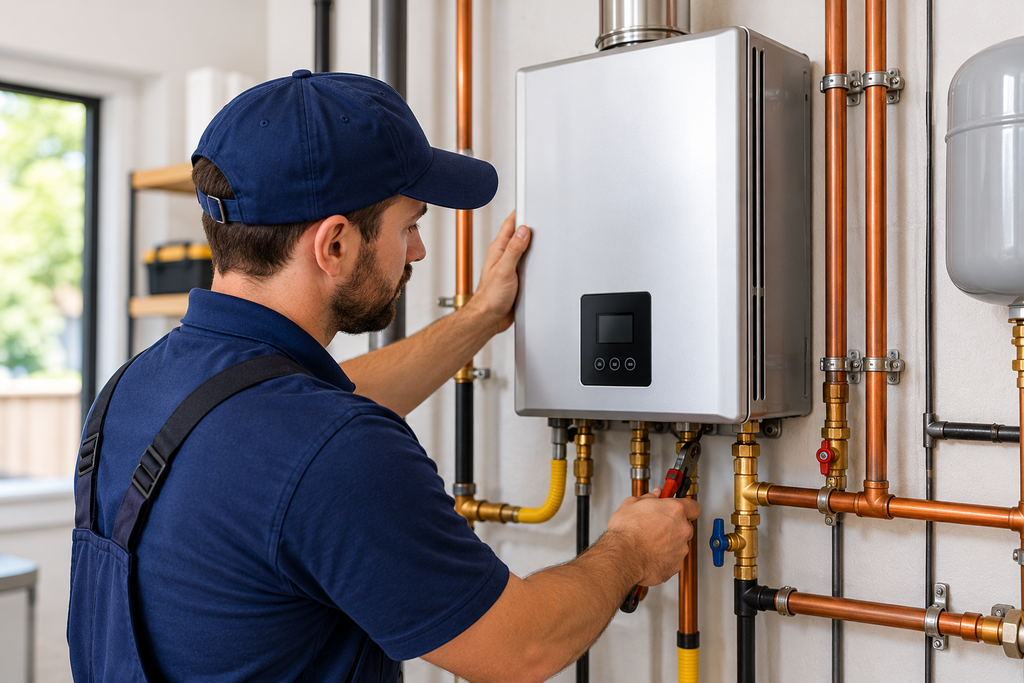
A tankless water heater provides hot water whenever you need it without storing large amounts of water in a tank. However, like any plumbing appliance, it needs regular care to keep working properly. Mineral buildup, clogged filters, and worn components can affect performance and lead to unexpected problems.
Regular tankless water heater maintenance helps identify these issues before they develop into major repairs. It can also help maintain consistent hot water, support energy efficiency, and extend the unit’s service life.
For homeowners in Rockland, MA, routine maintenance can be especially helpful during colder months when hot water is needed for showers, laundry, and everyday household tasks. Understanding how maintenance works can help you know when to schedule service and when to call for tankless water heater repair.
How Does Tankless Water Heater Maintenance Prevent Breakdowns?
Tankless water heaters contain several components that must work together to heat water on demand. If one part becomes dirty, blocked, or worn, the system may struggle to deliver the temperature or water flow you expect.
During maintenance, a plumber can inspect the unit, check its operation, and look for signs of wear or mineral deposits. Addressing these concerns early may prevent smaller problems from developing into more serious failures.
For example, a clogged inlet filter can restrict water flow, while mineral deposits inside the heat exchanger can interfere with heat transfer. Regular inspections help identify these issues before they cause repeated shutdowns or leave your household without hot water.
Prevent Mineral Buildup Inside the Heat Exchanger
Mineral buildup is one of the common concerns with tankless water heaters, particularly in areas with hard water. As water passes through the heat exchanger, minerals such as calcium and magnesium can accumulate inside the unit.
Over time, these deposits can reduce heat transfer, restrict water flow, and make the heater work harder to deliver hot water. In some cases, the unit may produce unusual noises or display an error code.
Routine descaling, when recommended by the manufacturer, helps remove mineral deposits and maintain normal operation. The required frequency depends on water hardness, household usage, and the specific heater model.
If you notice fluctuating water temperatures or unusual sounds, arranging an inspection may help determine whether mineral buildup is contributing to the problem.
Keep Filters and Water Flow Clear
A tankless water heater needs an adequate flow of water to operate correctly. Debris or sediment entering through the water supply can collect in the inlet filter and restrict that flow.
When water flow becomes too low, the unit may struggle to activate, deliver enough hot water, or maintain a consistent temperature. You might notice reduced performance when using multiple fixtures at the same time.
As part of tankless water heater maintenance, a plumber can inspect and clean accessible filters according to the manufacturer’s instructions. Keeping the water inlet clear helps the heater receive the flow it needs to operate as intended.
If your hot water pressure suddenly drops or the heater stops activating, avoid assuming that the unit itself has failed. A blocked filter or another plumbing issue may be responsible.
Check for Leaks and Worn Components
Even a small leak can become a bigger problem if it goes unnoticed. Connections, valves, seals, and other components can wear over time, particularly as the system experiences regular heating cycles.
During a maintenance visit, a plumber can look for signs of moisture, corrosion, damaged connections, or other visible concerns. Finding these problems early may help prevent water damage and reduce the risk of a more disruptive breakdown.
Some tankless water heaters also have pressure relief components and other safety-related parts that require inspection. These should be checked according to the manufacturer’s instructions and applicable safety requirements.
If you notice water around the unit, persistent dripping, or visible corrosion, arrange an inspection rather than waiting for the issue to get worse.
Maintain Reliable Water Temperature
Few things are more frustrating than a shower that suddenly turns cold or changes temperature without warning. Inconsistent hot water can result from several issues, including mineral buildup, restricted flow, incorrect settings, or problems with sensors and other components.
Regular maintenance helps identify conditions that may affect temperature control. A plumber can review the unit’s settings, inspect its operation, and determine whether cleaning or repairs are needed.
If your tankless water heater repeatedly switches between hot and cold water, the cause may not be obvious from the symptoms alone. Scheduling tankless water heater repair allows the system to be assessed so the underlying problem can be addressed rather than relying on repeated resets.
Identify Error Codes and Warning Signs Early
Many modern tankless water heaters display error codes when the system detects a problem. These alerts may relate to ignition, water flow, overheating, sensors, or ventilation, depending on the model.
Pay attention to recurring error codes, unusual noises, unexpected shutdowns, or a noticeable decline in hot water performance. Your owner’s manual may explain what a particular code means and whether it requires service.
Resetting the heater without identifying the underlying cause may not resolve the issue. If the same error keeps returning, a qualified plumber can inspect the system and determine the appropriate next step.
For homeowners in Rockland, MA, responding to warning signs early can help avoid an unexpected loss of hot water during periods of heavy household use.
How Often Should You Schedule Tankless Water Heater Maintenance?
The right maintenance schedule depends on the heater’s model, water quality, usage, and installation conditions. Many manufacturers recommend periodic maintenance, including descaling when needed, but the exact interval can vary.
Homes with hard water may require more frequent descaling than homes with softer water. A household that uses a large amount of hot water may also place greater demands on the system.
Check the manufacturer’s maintenance instructions and ask your plumber to recommend a schedule for your unit. Keeping a record of previous maintenance visits can also help you track when cleaning or inspection may be due.
Regular tankless water heater maintenance is easier to plan than dealing with a sudden breakdown when your household needs hot water.
When Should You Call for Tankless Water Heater Repair?
Maintenance helps prevent some problems, but it cannot stop every component from wearing out. You may need tankless water heater repair if the heater stops producing hot water, shuts down repeatedly, leaks, displays persistent error codes, or makes unusual noises.
Other warning signs include inconsistent temperatures, reduced hot water flow, or a unit that struggles to meet your household’s demand. These symptoms can have several causes, so an inspection is the safest way to determine what needs attention.
Do not attempt to repair gas connections, electrical components, or internal safety systems yourself. If you smell gas, leave the area and contact your gas utility or emergency services from a safe location. For other persistent performance issues, arrange service with a qualified plumbing and heating contractor.
Why Choose Steel Hill Plumbing & Heating in Rockland, MA?
Keeping your tankless water heater in good condition starts with understanding its maintenance needs and responding to problems early. Routine inspections and timely repairs can help maintain reliable hot water and reduce the likelihood of avoidable disruptions.
Steel Hill Plumbing & Heating serves homeowners looking for plumbing and heating assistance in the Rockland, MA, area. If your tankless water heater needs attention, you can discuss its symptoms, maintenance history, and service requirements with the team.
Whether you need routine maintenance or help diagnosing a recurring issue, arranging service can help you understand the condition of your system and the work it may require.
Conclusion: Prevent Problems with Regular Maintenance
A tankless water heater can provide reliable hot water for years, but it still needs regular care. Mineral buildup, restricted water flow, worn components, and neglected warning signs can all contribute to performance problems.
Routine maintenance helps identify these concerns early and gives your plumber an opportunity to address them before they lead to more disruptive breakdowns. Following the manufacturer’s recommendations and scheduling repairs when problems appear can also help protect your investment.
Need tankless water heater maintenance or repair in Rockland, MA? Contact Steel Hill Plumbing & Heating to discuss your system and schedule the service your home needs.
Frequently Asked Questions
Can Regular Tankless Water Heater Maintenance Prevent All Breakdowns?
No. Maintenance can help identify common issues and reduce the risk of certain failures, but it cannot prevent every problem. Components may still wear out or fail over time.
How Often Should a Tankless Water Heater Be Descaled?
The frequency depends on water hardness, usage, and manufacturer recommendations. Homes with hard water may need more frequent descaling. Ask your plumber to determine the right schedule for your unit.
What Are the Signs That My Tankless Water Heater Needs Repair?
Common signs include inconsistent water temperature, reduced hot water flow, recurring error codes, unusual noises, leaks, or a complete loss of hot water.
Is Tankless Water Heater Maintenance Necessary if the Unit Works Properly?
Yes. Some mineral buildup and component wear may develop before obvious symptoms appear. Routine maintenance helps identify potential problems and keep the system operating as intended.
Can I Maintain My Tankless Water Heater Myself?
You can follow the manufacturer’s basic care instructions and monitor the unit for warning signs. However, descaling and internal inspections may require specific procedures. Gas, electrical, and safety-related repairs should be handled by qualified professionals.