
PEX vs Copper Pipes for New Construction: Which Is Better?
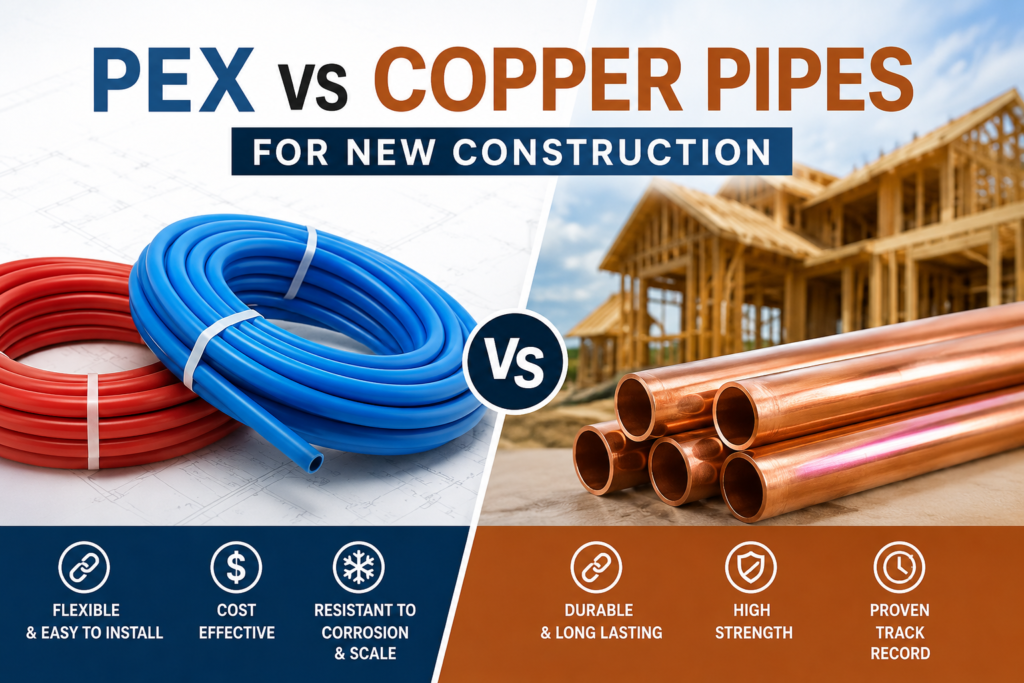
Planning a new construction project and trying to decide which type of pipe is right for your plumbing system? Choosing between PEX and copper pipes can affect your installation cost, maintenance needs, water flow, and the overall life of your plumbing system. Both materials are widely used across the United States, but each offers different benefits depending on your project. If you are planning new construction plumbing in Hanover, MA, understanding the differences between PEX and copper can help you make a smart decision before construction begins. This guide explains both options in simple language so you can choose the one that best fits your needs. Why Choosing the Right Pipe Is Important The plumbing system is one of the most important parts of any building. Once the walls and floors are finished, replacing pipes can become expensive and time consuming. That is why selecting the right material during construction is important. A well planned plumbing system can help you: Taking time to compare your options today can help you avoid unexpected problems in the future. What Are PEX Pipes? PEX stands for cross linked polyethylene. It is a flexible plastic pipe that has become very popular for residential and commercial construction across the United States. Unlike metal pipes, PEX can bend around corners. Because of this flexibility, plumbers often use fewer fittings and connectors during installation. This makes the installation process quicker and simpler. PEX pipes are commonly used for: Because they are lightweight and flexible, many contractors choose PEX for modern construction projects. What Are Copper Pipes? Copper pipes have been used in plumbing systems for many decades. They are made from metal and have earned a strong reputation for durability and long term performance. Many older homes still have copper plumbing because these pipes can last for many years when properly installed and maintained. Copper pipes are commonly used for: Even with newer materials available, copper continues to be a trusted option for many builders. Comparing PEX and Copper Pipes Both PEX and copper have advantages. The better choice depends on your budget, project requirements, and personal preference. PEX offers: Copper offers: Each material performs well when installed by experienced plumbing professionals. Installation Process One of the biggest differences between PEX and copper is the installation process. PEX pipes are flexible, allowing plumbers to run longer sections through walls and around corners with fewer fittings. This makes the work faster and often reduces labor costs. Installing copper pipes takes more time because each section must be measured, cut, cleaned, soldered, cooled, and tested before the system is complete. Since PEX installation requires fewer steps, many contractors choose it for projects with tight construction schedules. Cost Comparison Budget is always an important part of any construction project. PEX is usually more affordable than copper. The material itself costs less, and because installation is quicker, labor costs are often lower as well. Copper generally costs more because metal prices continue to change. It also requires more labor during installation, which increases the total project cost. Although copper has a higher upfront cost, many property owners still choose it because of its long history and durability. Durability and Lifespan Both PEX and copper can provide many years of reliable performance. Copper pipes often last more than fifty years when water conditions are favorable. However, some areas may experience corrosion, pinhole leaks, or mineral buildup over time. PEX pipes normally last between forty and fifty years. They resist corrosion and mineral buildup, making them a dependable option for many modern plumbing systems. The actual lifespan of either material depends on proper installation, water quality, and regular maintenance. Which Pipe Performs Better During Cold Weather? Cold temperatures can create serious plumbing problems if water freezes inside the pipes. PEX has an advantage because it can expand slightly if water freezes. This flexibility helps reduce the chance of the pipe cracking. Copper pipes are rigid and cannot expand. When water freezes inside them, pressure increases quickly, making them more likely to burst. Although every plumbing system should be protected from freezing temperatures, PEX generally handles these conditions better. Water Quality Many homeowners wonder if pipe material affects drinking water. Both PEX and copper are approved for potable water systems when they meet current plumbing standards. Copper has supplied drinking water safely for many decades. PEX has also become a trusted choice because it meets modern safety requirements. No matter which material you choose, proper installation and following local plumbing codes play the biggest role in maintaining clean and safe water. Noise During Water Flow Some plumbing systems become noisy when water moves through the pipes. Copper pipes are rigid, so they may create more vibration and water movement sounds. PEX naturally absorbs some of these vibrations because it is flexible. This often makes the plumbing system quieter during everyday use. Many homeowners appreciate the reduced noise that PEX provides. Maintenance Requirements Both PEX and copper pipes require very little maintenance when they are installed correctly. Even so, each material has a few things that property owners should know. Copper pipes can develop corrosion over time if the water contains certain minerals or chemicals. In some cases, mineral deposits may build up inside the pipes, which can reduce water flow. Older copper systems may also need repairs if soldered joints begin to wear out after many years. PEX pipes do not rust or corrode, making them a popular choice for many new construction projects. They also resist mineral buildup better than copper. However, PEX should not be installed where it will be exposed to direct sunlight for long periods because ultraviolet light can damage the material. Regular plumbing inspections can help identify small issues before they become expensive repairs, regardless of the pipe material you choose. Environmental Impact Many builders today consider the environmental impact of construction materials before making a decision. Copper is a natural metal that can be recycled many times without losing its quality. Because of this, copper remains a
What Is Included in New Construction Plumbing Services in Abington, MA?
When a new building project begins, most property owners focus on flooring, paint colors, windows, or exterior design. Plumbing usually becomes a topic later in the process. However, plumbing is one of the most important systems inside any property because it supports daily comfort, sanitation, and water usage. Whether it is a new office, retail store, warehouse, restaurant, or family home, the plumbing system must be planned properly from the beginning. That is why many property owners want to understand what is included in new construction plumbing in Abington MA before construction starts. New construction plumbing involves much more than connecting sinks and toilets. It includes water lines, sewer connections, drainage systems, vent pipes, gas lines, water heaters, inspections, and final testing. Every stage works together to create a plumbing system that functions safely and efficiently for years. In this blog, we will explain the major services included in new construction plumbing projects and why professional installation matters for residential and commercial properties in Abington. Plumbing Planning Begins Early in Construction Many people think plumbers only arrive after the building structure is complete. In reality, plumbing work starts during the early planning stages of construction. Professional plumbers review the building plans carefully before installation begins. They work with contractors, electricians, HVAC teams, and inspectors to make sure everything fits correctly inside the structure. A properly designed plumbing system helps prevent problems such as: For commercial properties, proper plumbing planning also supports smooth business operations and better water efficiency. The Design and Consultation Stage The first step in new construction plumbing in Abington MA is usually the planning and consultation process. During this stage, plumbing contractors study the property layout and create a plumbing system that matches the building requirements. This part of the project includes decisions about water lines, drainage systems, vent locations, fixture placement, and water heater sizing. The contractor also checks local Massachusetts plumbing regulations to make sure the installation follows all required codes before construction moves forward. For larger commercial projects, plumbing planning may involve additional drainage systems and special equipment depending on the type of business. Underground Plumbing Installation One of the first major plumbing tasks happens underground before the concrete foundation is completed. At this stage, plumbers install the main sewer lines, drain pipes, and water supply connections underneath the building. These systems create the base of the entire plumbing network. Underground plumbing work often includes: This stage is extremely important because underground plumbing problems can become difficult and expensive to repair later. Professional plumbers carefully check pipe positioning and drainage flow to avoid future issues. Water Supply Line Installation Once the structure starts taking shape, plumbers install water supply lines throughout the property. These pipes move clean water to different fixtures and appliances inside the building. Water supply lines connect to areas such as kitchens, bathrooms, laundry rooms, utility spaces, and commercial equipment. Modern plumbing systems often use materials like PEX or copper piping because they are reliable and long lasting. During this phase, plumbers also install shut off valves and pressure regulators to help protect the plumbing system from pressure related damage. A properly installed water supply system improves water flow and reduces the risk of leaks over time. Drainage and Vent System Installation Drainage systems remove wastewater from the building while vent systems maintain proper airflow inside the pipes. Without proper venting, plumbing systems may develop slow drains and unpleasant odors. This stage of new construction plumbing in Abington MA is very important because hidden drainage problems can eventually damage walls, floors, and foundations. Drain and vent installation may include: Professional installation helps wastewater move properly through the plumbing system. Bathroom Plumbing Installation Bathrooms contain some of the most frequently used plumbing fixtures in any property. During construction, plumbers install supply lines, drain pipes, fixture connections, and vent systems according to the approved building design. Bathroom plumbing work may include toilet installation, sink connections, shower plumbing, bathtub setup, and drain installation. Commercial buildings may also require ADA compliant plumbing fixtures to meet accessibility standards. A properly installed bathroom plumbing system improves convenience, water efficiency, and daily comfort for building occupants. Kitchen Plumbing Services Kitchen plumbing systems require careful planning because they handle both water supply and wastewater removal. In residential and commercial buildings, kitchen plumbing often supports multiple appliances and fixtures at the same time. Kitchen plumbing services may include: Restaurants and food related businesses may also need grease trap systems and larger drainage setups to support daily operations. Professional installation helps prevent clogs, leaks, and drainage issues later. Water Heater Installation During New Construction Hot water plays an important role in both homes and commercial buildings. Choosing the correct water heater during construction can improve comfort while lowering future energy costs. Professional plumbers may install traditional tank water heaters, tankless systems, electric units, or commercial hot water systems depending on the property needs. Many property owners also request water heater installation in Abington MA during construction projects because newer systems provide better efficiency and long term savings. Tankless water heaters are becoming more common because they save space and provide hot water only when needed. Gas Line Installation Some new buildings require gas lines for heating systems, fireplaces, dryers, water heaters, or kitchen appliances. Gas line installation must follow strict Massachusetts safety regulations to protect the property and its occupants. Professional plumbers install and test gas systems carefully before final approval. Gas plumbing services may include: Licensed plumbers make sure the entire gas system operates safely and efficiently. Commercial Plumbing Systems Commercial plumbing systems are usually larger and more detailed than residential systems because they support higher daily water usage. Restaurants, office buildings, warehouses, and retail stores all require different plumbing layouts depending on business operations. Commercial plumbing systems may include larger water supply lines, multiple restroom areas, industrial drainage systems, grease interceptors, and commercial water heaters. A properly installed commercial plumbing system helps businesses operate without interruptions caused by plumbing problems. Fixture Installation and Final Setup Once the walls,