
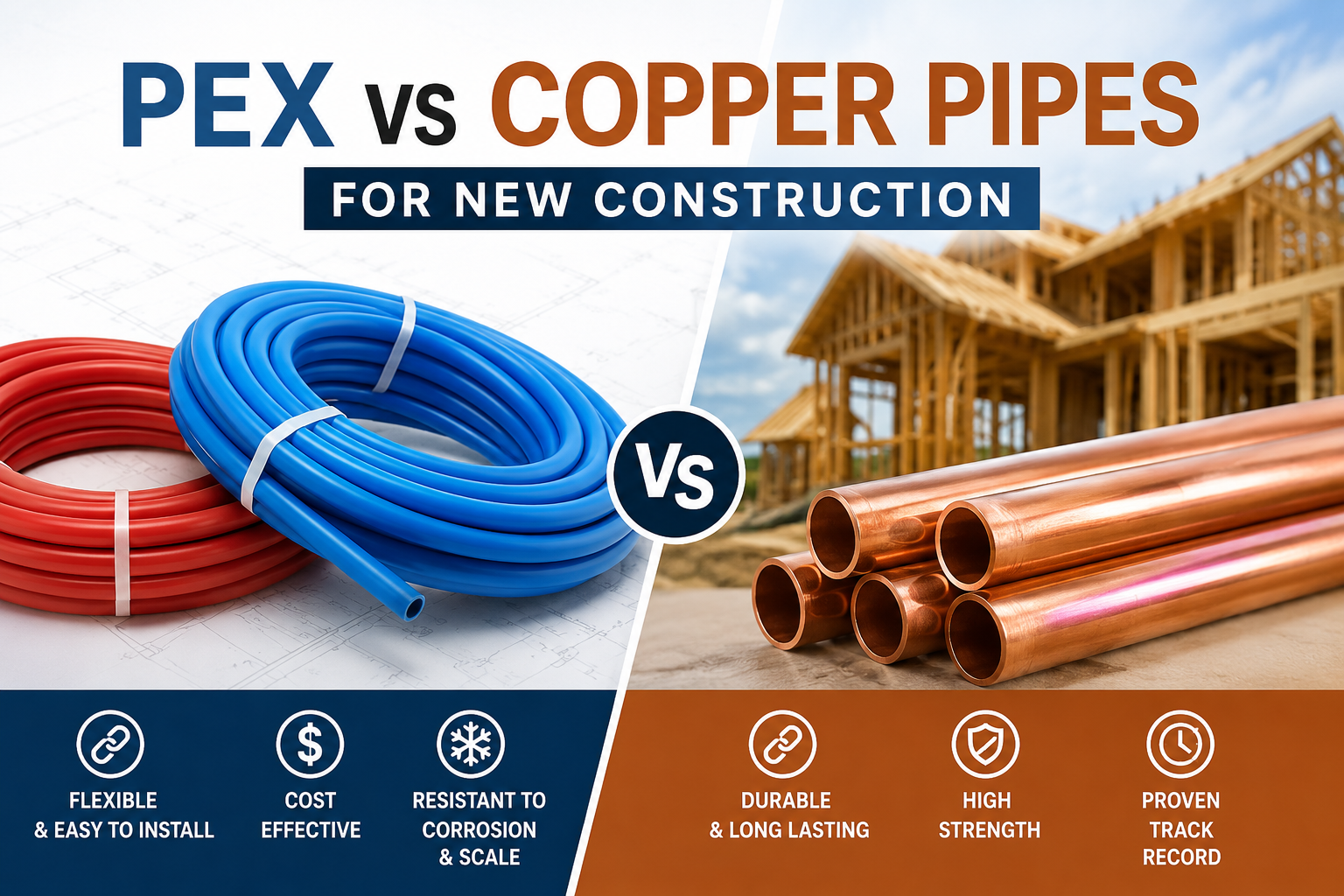
Planning a new construction project and trying to decide which type of pipe is right for your plumbing system? Choosing between PEX and copper pipes can affect your installation cost, maintenance needs, water flow, and the overall life of your plumbing system. Both materials are widely used across the United States, but each offers different benefits depending on your project.
If you are planning new construction plumbing in Hanover, MA, understanding the differences between PEX and copper can help you make a smart decision before construction begins. This guide explains both options in simple language so you can choose the one that best fits your needs.
Why Choosing the Right Pipe Is Important
The plumbing system is one of the most important parts of any building. Once the walls and floors are finished, replacing pipes can become expensive and time consuming. That is why selecting the right material during construction is important.
A well planned plumbing system can help you:
- Lower future repair costs
- Improve water flow throughout the building
- Increase energy efficiency
- Reduce installation time
- Extend the life of your plumbing system
Taking time to compare your options today can help you avoid unexpected problems in the future.
What Are PEX Pipes?
PEX stands for cross linked polyethylene. It is a flexible plastic pipe that has become very popular for residential and commercial construction across the United States.
Unlike metal pipes, PEX can bend around corners. Because of this flexibility, plumbers often use fewer fittings and connectors during installation. This makes the installation process quicker and simpler.
PEX pipes are commonly used for:
- New homes
- Apartment buildings
- Remodeling projects
- Water supply systems
- Radiant floor heating
Because they are lightweight and flexible, many contractors choose PEX for modern construction projects.
What Are Copper Pipes?
Copper pipes have been used in plumbing systems for many decades. They are made from metal and have earned a strong reputation for durability and long term performance.
Many older homes still have copper plumbing because these pipes can last for many years when properly installed and maintained.
Copper pipes are commonly used for:
- Residential properties
- Commercial buildings
- Municipal water systems
- Hot and cold water supply lines
Even with newer materials available, copper continues to be a trusted option for many builders.
Comparing PEX and Copper Pipes
Both PEX and copper have advantages. The better choice depends on your budget, project requirements, and personal preference.
PEX offers:
- Lower material cost
- Faster installation
- Flexible design
- Better resistance to freezing temperatures
- Quieter water flow
Copper offers:
- Excellent long term durability
- Strong resistance to sunlight
- A long history of dependable performance
- High resale appeal for some homeowners
Each material performs well when installed by experienced plumbing professionals.
Installation Process
One of the biggest differences between PEX and copper is the installation process.
PEX pipes are flexible, allowing plumbers to run longer sections through walls and around corners with fewer fittings. This makes the work faster and often reduces labor costs.
Installing copper pipes takes more time because each section must be measured, cut, cleaned, soldered, cooled, and tested before the system is complete.
Since PEX installation requires fewer steps, many contractors choose it for projects with tight construction schedules.
Cost Comparison
Budget is always an important part of any construction project.
PEX is usually more affordable than copper. The material itself costs less, and because installation is quicker, labor costs are often lower as well.
Copper generally costs more because metal prices continue to change. It also requires more labor during installation, which increases the total project cost.
Although copper has a higher upfront cost, many property owners still choose it because of its long history and durability.
Durability and Lifespan
Both PEX and copper can provide many years of reliable performance.
Copper pipes often last more than fifty years when water conditions are favorable. However, some areas may experience corrosion, pinhole leaks, or mineral buildup over time.
PEX pipes normally last between forty and fifty years. They resist corrosion and mineral buildup, making them a dependable option for many modern plumbing systems.
The actual lifespan of either material depends on proper installation, water quality, and regular maintenance.
Which Pipe Performs Better During Cold Weather?
Cold temperatures can create serious plumbing problems if water freezes inside the pipes.
PEX has an advantage because it can expand slightly if water freezes. This flexibility helps reduce the chance of the pipe cracking.
Copper pipes are rigid and cannot expand. When water freezes inside them, pressure increases quickly, making them more likely to burst.
Although every plumbing system should be protected from freezing temperatures, PEX generally handles these conditions better.
Water Quality
Many homeowners wonder if pipe material affects drinking water.
Both PEX and copper are approved for potable water systems when they meet current plumbing standards.
Copper has supplied drinking water safely for many decades. PEX has also become a trusted choice because it meets modern safety requirements.
No matter which material you choose, proper installation and following local plumbing codes play the biggest role in maintaining clean and safe water.
Noise During Water Flow
Some plumbing systems become noisy when water moves through the pipes.
Copper pipes are rigid, so they may create more vibration and water movement sounds.
PEX naturally absorbs some of these vibrations because it is flexible. This often makes the plumbing system quieter during everyday use.
Many homeowners appreciate the reduced noise that PEX provides.
Maintenance Requirements
Both PEX and copper pipes require very little maintenance when they are installed correctly. Even so, each material has a few things that property owners should know.
Copper pipes can develop corrosion over time if the water contains certain minerals or chemicals. In some cases, mineral deposits may build up inside the pipes, which can reduce water flow. Older copper systems may also need repairs if soldered joints begin to wear out after many years.
PEX pipes do not rust or corrode, making them a popular choice for many new construction projects. They also resist mineral buildup better than copper. However, PEX should not be installed where it will be exposed to direct sunlight for long periods because ultraviolet light can damage the material.
Regular plumbing inspections can help identify small issues before they become expensive repairs, regardless of the pipe material you choose.
Environmental Impact
Many builders today consider the environmental impact of construction materials before making a decision.
Copper is a natural metal that can be recycled many times without losing its quality. Because of this, copper remains a popular option for projects that focus on sustainability.
PEX also offers environmental benefits. It requires less energy during manufacturing, weighs much less than copper, and creates less waste during installation. Since it is lightweight, transporting PEX also uses less fuel.
Both materials have environmental advantages, so the right choice depends on your project goals and priorities.
Which Material Is Better for Commercial Construction?
Commercial buildings often have different plumbing requirements than residential homes.
Copper continues to be used in many hospitals, industrial buildings, and projects where metal piping is preferred.
PEX has become increasingly common in commercial construction because it helps reduce installation time and labor costs. Many contractors now use PEX in:
- Hotels
- Apartment complexes
- Office buildings
- Mixed use developments
- Residential communities
Its flexibility allows plumbers to complete large plumbing systems more efficiently, helping construction projects stay on schedule.
Building Codes and Professional Installation
Every city and state has plumbing codes that must be followed during construction.
Professional plumbers understand local requirements, pipe sizing, water pressure calculations, inspections, and permit regulations. Working with experienced professionals helps ensure your plumbing system is installed safely and correctly.
If your project also includes gas piping installation in Hanover, MA, it is important to hire licensed professionals who understand local safety standards and building codes.
Many plumbing contractors also provide gas piping installation services, allowing property owners to complete both water and gas line work through one experienced team. This can simplify project management and help maintain consistent quality throughout the installation.
When Should You Choose PEX?
PEX is an excellent option for many modern construction projects because it offers several practical benefits.
You may want to choose PEX if you are looking for:
- Lower installation costs
- Faster construction
- Flexible piping
- Better protection against freezing temperatures
- A quieter plumbing system
For many homeowners and builders, PEX provides a good balance between affordability and long term performance.
When Is Copper the Better Choice?
Copper remains a dependable choice for many residential and commercial buildings.
It may be the better option if you prefer:
- A traditional plumbing material
- Excellent resistance to sunlight
- A proven history of durability
- Strong resale appeal
- Metal piping throughout the property
Although copper costs more, many property owners value its long standing reputation and reliability.
Questions to Ask Before Making Your Decision
Before selecting your plumbing material, discuss these questions with your plumbing contractor.
- What is the total project budget?
- What plumbing materials are approved by local building codes?
- What are the local water conditions?
- Will any pipes be exposed to sunlight?
- How long do you expect the building to last?
- Is completing construction quickly a priority?
- Could future renovations affect the plumbing system?
Answering these questions can help you select the material that best fits your project.
Expert Recommendation
There is no single answer that works for every construction project.
PEX is a great option for many modern homes because it is flexible, affordable, and quick to install.
Copper continues to be an excellent choice for projects where long term durability and traditional plumbing materials are preferred.
The best decision depends on your budget, building design, local plumbing codes, and the experience of the contractor completing the work.
If you are planning new construction plumbing in Hanover, MA, speaking with a licensed plumbing professional can help you determine which material is the right fit for your property.
Conclusion
Choosing between PEX and copper pipes is an important decision that can affect the performance and maintenance of your property for many years. If you are planning new construction plumbing in Hanover, MA, working with experienced professionals can help you select the best piping system for your project.
Steel Hill Plumbing and Heating is known for providing dependable plumbing services for residential and commercial construction projects. Their experienced team focuses on quality workmanship, reliable solutions, and customer satisfaction from the beginning of every project to the final installation.
Frequently Asked Questions
Is PEX better than copper for new homes?
PEX is often chosen because it costs less, installs faster, and performs well in cold weather. Copper remains a reliable choice for homeowners who prefer a traditional plumbing system.
How long do PEX pipes last?
Most PEX plumbing systems last between forty and fifty years when they are installed properly and maintained correctly.
Can PEX be used for hot and cold water?
Yes. PEX is designed to carry both hot and cold water and is commonly used in residential and commercial plumbing systems.
Does copper plumbing increase home value?
Some buyers consider copper plumbing a premium feature because of its long history and dependable performance. However, both copper and PEX are accepted materials in modern construction.
Which material is easier to repair?
PEX repairs are usually faster because they require fewer tools and simpler connections. Copper repairs often involve cutting and soldering the pipe.
Should I hire a licensed plumber for new construction?
Yes. A licensed plumber helps ensure your plumbing system follows local building codes, passes inspections, and performs reliably for many years.