
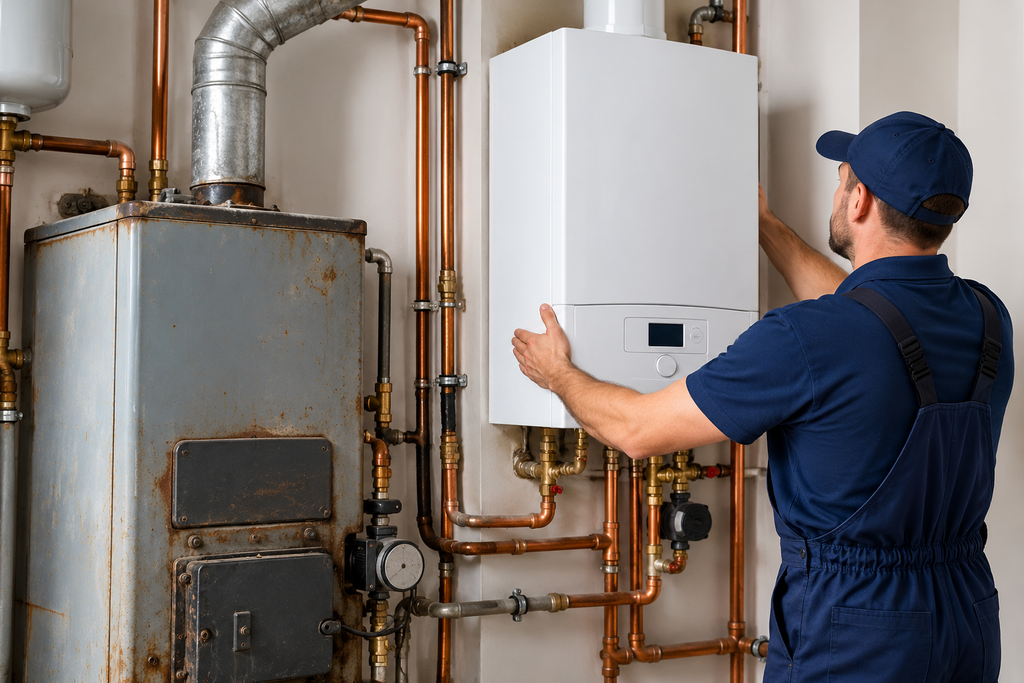
A reliable boiler helps keep your home warm and comfortable during the cold Massachusetts winter. However, when your current boiler starts breaking down, takes longer to heat your home, or requires frequent repairs, replacing it may become a practical option.
The cost of boiler replacement services depends on several factors, including the type of boiler you select, the size of your home, the condition of your existing heating system, and the work required for installation. Two homes may need different budgets even when their boilers seem similar.
If you live in Rockland, MA, understanding these factors can help you prepare for the expense and ask the right questions before starting a project. Steel Hill Plumbing & Heating can help you discuss your heating needs and determine the next steps for your home.
Boiler Type and Model Affect the Total Cost
One of the first factors that affects boiler replacement costs is the type of boiler you choose. Different models have different purchase prices, heating capacities, features, and installation requirements.
Conventional boilers, system boilers, and combi boilers each work differently. A combi boiler provides heating and hot water from one unit, while other systems may use a separate hot water storage tank. The right option depends on your household’s hot water demand, available space, and existing plumbing.
When planning a new boiler replacement, consider more than the initial purchase price. Ask about the boiler’s expected operating costs, warranty, maintenance requirements, and compatibility with your home. A suitable model can help you balance upfront expenses with long-term heating needs.
Boiler Size and Your Home’s Heating Needs
The size of your boiler also plays an important role in the overall cost. A boiler that is too small may struggle to keep your home warm, while an oversized unit can cost more than necessary and may operate less efficiently.
Heating requirements depend on several details, including the size of your property, insulation quality, number of rooms, window performance, and hot water demand. The number of people living in your home can also affect how much hot water you use.
For homeowners in Rockland, MA, choosing the right boiler capacity means considering how the entire property uses heat rather than selecting a unit based only on the old boiler’s specifications. A heating contractor can assess these factors and recommend an appropriate system.
Existing Heating System and Installation Work
The condition of your current heating system can significantly affect the cost of boiler replacement services. If the new unit is compatible with your existing pipework, venting, controls, and heating distribution system, the installation may require fewer changes.
However, additional work may be necessary if the current boiler is in a difficult location, the pipework needs modification, or the venting system is unsuitable for the new model. Electrical connections, drainage arrangements, and control systems may also require attention.
Replacing a boiler is not always a simple matter of removing the old unit and connecting a new one. Before approving a quote, ask which installation tasks are included and whether any additional work may be required once the existing system has been inspected.
Fuel Type and Energy Efficiency
The fuel used by your boiler can affect both the equipment price and the cost of installation. Homes may have natural gas, oil, propane, or another heating arrangement, depending on the property’s existing infrastructure and local availability.
Switching fuel types can involve additional work, such as new connections, changes to venting, or other system modifications. These requirements can make a new boiler replacement more expensive than installing a compatible unit that uses the existing fuel source.
Energy efficiency is another factor worth considering. A higher-efficiency model may cost more upfront, but it could reduce fuel use under suitable operating conditions. Actual savings depend on your previous boiler’s condition, household heating habits, fuel prices, insulation, and system setup. Ask your contractor to explain the expected benefits without relying on guaranteed savings.
Labor Costs and Project Complexity
Labor is another part of the total replacement price. The amount of time required depends on the boiler’s location, the complexity of the heating system, and whether any additional installation work is needed.
A straightforward replacement may take less work than a project involving pipe relocation, system flushing, new controls, or changes to venting. Access can also matter. A boiler located in a cramped basement or difficult-to-reach area may require additional time to remove and install the equipment.
When comparing boiler replacement services, review the full scope of each estimate. A lower quote may not include the same preparation, removal, testing, or cleanup as another quote. Understanding what is covered makes it easier to compare costs fairly.
Permits, Safety Checks, and Code Requirements
Depending on the project and applicable local requirements, boiler replacement may involve permits, inspections, or other compliance-related work. These requirements help ensure the heating system is installed and operated safely.
The work may also need to meet applicable Massachusetts and local building, plumbing, fuel-gas, and mechanical requirements. The exact requirements depend on the boiler type and installation details.
Ask Steel Hill Plumbing & Heating which permits or inspections may apply to your project in Rockland, MA, and whether associated costs are included in the estimate. Confirming these details before installation can help prevent unexpected expenses or delays.
Removing the Old Boiler and Handling Additional Repairs
The cost of replacing a boiler may include disconnecting, removing, and disposing of the existing unit. The price can vary depending on the boiler’s size, location, accessibility, and condition.
Sometimes, removing the old boiler reveals issues that need attention before the new system can be installed. Examples may include damaged pipework, leaking valves, worn components, or heating system problems that were not obvious during the initial assessment.
Not every replacement requires these repairs, but it is worth asking how unexpected issues will be handled. A clear estimate should explain the planned work and how additional costs will be approved if something changes during installation.
How to Plan Your Boiler Replacement Budget
Before committing to a new boiler replacement, request a written estimate that separates equipment costs from labor and other charges. Check whether the price includes removing the old unit, connecting the new boiler, required system modifications, testing, and cleanup.
You can also ask about manufacturer warranties, maintenance requirements, available rebates, and financing options if offered. Incentives may depend on the equipment selected, current programs, household eligibility, and installation requirements, so confirm availability before including them in your budget.
It is also useful to consider the age and repair history of your current boiler. If repairs are becoming frequent, compare the likely cost of continued maintenance with the price of replacement. A heating contractor can help explain the options based on your system’s condition.
Why Choose Steel Hill Plumbing & Heating in Rockland, MA?
Replacing a boiler is an important home expense, and understanding the work involved can make the process easier. Homeowners need clear information about equipment choices, installation requirements, potential additional repairs, and the total price.
Steel Hill Plumbing & Heating can help homeowners in Rockland, MA, discuss their heating requirements and explore options for boiler replacement. Before moving forward, ask for an assessment of your existing system and a written estimate that explains the proposed work.
Knowing what is included gives you a clearer picture of the cost and helps you make a decision that fits your home’s heating needs.
Conclusion
The cost of boiler replacement services depends on several factors, from the boiler model and size to labor, fuel type, permits, and the condition of your current heating system. Understanding these details helps you plan your budget and compare estimates more confidently.
Rather than focusing only on the equipment price, consider the full cost of installation and the system’s expected operating needs. A suitable boiler, correctly installed and maintained, can provide reliable heating for years.
Need a boiler replacement in Rockland, MA? Contact Steel Hill Plumbing & Heating to discuss your home’s heating needs and request an estimate for your replacement project.
Frequently Asked Questions
How Much Do Boiler Replacement Services Cost?
The price varies based on boiler type, size, fuel source, installation complexity, and additional work. Request a written estimate after your existing heating system has been assessed.
What Is Included in a New Boiler Replacement?
A replacement may include the new boiler, removal of the old unit, installation labor, connections, testing, and required modifications. Confirm which services and charges are included in your quote.
Does Boiler Size Affect Replacement Costs?
Yes. Larger-capacity boilers may cost more, and installation requirements can vary. A heating contractor should assess your property’s size, insulation, and hot water demand to determine the appropriate capacity.
Is It Cheaper to Replace a Boiler With the Same Type?
It can be less expensive when the new boiler is compatible with your existing pipework, fuel source, venting, and controls. However, the actual cost depends on the equipment and the condition of the existing system.
When Should I Replace My Boiler Instead of Repairing It?
Consider replacement if your boiler experiences frequent breakdowns, struggles to heat your home, or requires increasingly expensive repairs. A qualified heating contractor can inspect the system and help you compare repair and replacement options.