
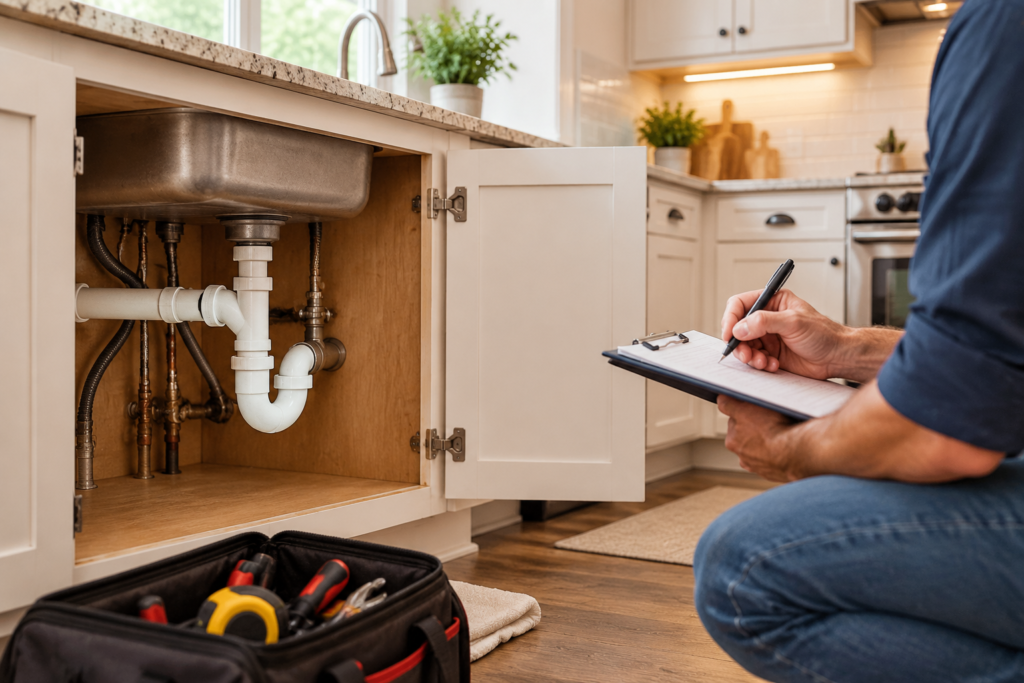
Planning a kitchen remodel in an older home can reveal problems that have been hidden for years. You may start with new cabinets, countertops, flooring, or appliances, only to find that the plumbing behind the walls needs attention too.
Older kitchens often have plumbing that has been repaired, changed, or added to several times. A previous homeowner may have moved a sink, added a dishwasher, replaced a pipe, or installed an appliance without updating the rest of the system. Some of these changes may work for years, while others can create leaks, poor drainage, low water pressure, or other problems.
That is why plumbing should be checked before the remodeling work begins. If you are planning kitchen renovation plumbing in Randolph MA, finding these issues early can help prevent delays, damaged materials, and unexpected changes after the cabinets and walls are already in place.
Check the Condition of Old Pipes
The age and condition of the existing pipes should be one of the first things to review.
Older homes may have different types of supply, drain, waste, and vent piping. Some materials can last for many years, but age alone does not tell you whether a pipe is still in good condition.
A plumber can look for corrosion, mineral buildup, leaks, damaged joints, and signs of previous repairs. Exposed sections under the kitchen sink can also provide clues about what may be hidden inside the walls.
If the plumbing has been repaired several times, it may be worth checking more of the system before the remodel starts.
Replacing an old section while the walls or cabinets are already open can be much easier than opening finished areas later.
Look for Hidden Water Leaks
A small leak can cause a much larger problem when it stays hidden.
Check around the kitchen sink, dishwasher connection, refrigerator water line, shutoff valves, and nearby supply pipes. Look for water stains, swollen cabinet material, soft flooring, musty odors, or discoloration.
You should also check areas behind walls when there are signs of previous water damage.
A leak does not always produce a large puddle. A slow leak can gradually damage wood, insulation, flooring, and other materials.
Before new cabinets are installed, it is easier to correct these problems and let affected areas dry properly.
Test the Water Pressure
Water pressure is easy to overlook during a kitchen remodel.
A new faucet may look great, but it will not solve a weak supply line or pressure problem. If water pressure is already low, adding another fixture or changing the kitchen layout may make the problem more noticeable.
A plumber can check the water pressure and determine whether the problem comes from the supply system, a valve, a clogged pipe, or another issue.
This is also a good time to think about the number of fixtures you plan to use.
If you are adding a pot filler, second sink, refrigerator water line, or other fixture, the existing plumbing should be checked before the layout is finalized.
Inspect the Kitchen Drain Lines
Kitchen sinks deal with grease, food particles, soap, and other material every day. Over many years, buildup can collect inside drain pipes.
If the sink drains slowly, backs up often, or produces an unpleasant odor, the problem should be checked before remodeling.
A slow drain can be caused by a local blockage, but it may also point to a larger issue farther down the line.
The same applies if the kitchen shares drainage with other fixtures and those fixtures are also slow.
A remodeling project gives you a chance to deal with drainage problems before the new cabinets hide the plumbing.
Check the Garbage Disposal Drain
If your kitchen has a garbage disposal, check its drain connection before changing the sink or cabinet layout.
The disposal needs proper drainage, and the drain piping must be arranged correctly for the kitchen setup.
If the new sink will have a different size or configuration, the drain connection may need to change.
Do not assume that the old arrangement will work with the new sink.
This is especially important when moving the sink to another part of the kitchen. A new location can change the required drain and supply piping.
Inspect Dishwasher Connections
Dishwashers depend on both water supply and drainage.
The water supply connection should be checked for leaks, corrosion, and proper shutoff access. The drain connection should also be inspected for signs of improper installation or past leaks.
If you are replacing an older dishwasher, the new appliance may have different connection requirements.
It is better to check these details before the cabinets are installed.
A dishwasher leak can cause damage under cabinets and flooring, and the problem may not become obvious until the appliance has been running for some time.
Check the Refrigerator Water Line
Modern refrigerators often have water and ice features that require a supply line.
If your older kitchen has a refrigerator water connection, inspect it before remodeling. Look for old tubing, loose connections, damaged valves, or signs of previous leaks.
If you are moving the refrigerator, the water line may also need to be relocated.
A refrigerator leak can be especially troublesome because the appliance may sit against a wall or cabinet where a small leak is difficult to notice.
During a remodel, this is a good time to make sure the connection is easy to access and properly installed.
Review Shutoff Valves
Every major fixture should have an accessible way to shut off its water supply.
Old shutoff valves can become stiff, corroded, or difficult to operate. If a valve has not been used for years, you may not know whether it will actually close when you need it.
A remodeling project is a practical time to inspect these valves.
If a sink or appliance needs emergency attention later, an accessible working shutoff can help limit water damage.
Do not hide important valves behind permanent cabinets or other construction where they cannot be reached easily.
Check the Vent System
Drain pipes need proper venting so wastewater can flow correctly.
A plumbing vent helps maintain pressure within the drainage system. Problems with venting can contribute to slow drainage, gurgling sounds, unpleasant odors, or other plumbing issues.
If the kitchen layout is changing, the existing vent arrangement should be reviewed rather than assuming the old setup can remain unchanged.
This becomes even more important when moving a sink to a new location.
A plumber can determine whether the proposed layout works with the existing drain and vent system.
Think About the New Kitchen Layout
A kitchen remodel often changes more than the appearance of the room.
You may move the sink to an island, relocate the dishwasher, add a second sink, move the refrigerator, or install new appliances.
Each change can affect plumbing.
Moving a sink, for example, may require new supply lines, drainage, and venting. Moving appliances can also require new connections.
The earlier these changes are discussed, the easier it is to coordinate plumbing with cabinet and electrical plans.
Good remodeling plans should consider the location of plumbing before construction begins.
Check for Outdated Plumbing Repairs
Older homes sometimes contain plumbing repairs that were made as temporary solutions but remained in place for years.
You might find mismatched pipe materials, old fittings, patched sections, or connections that no longer fit the planned kitchen layout.
One repair may not be a serious concern. Several repairs across the kitchen can be a sign that the system deserves a closer inspection.
When the walls are open, a plumber can often identify problems that would otherwise remain hidden.
Replacing questionable sections during the remodel may save the homeowner from opening the finished kitchen later.
Plumbing Permits Matter in Massachusetts
Homeowners should not assume that all plumbing changes are minor.
Massachusetts states that a local plumbing inspector must issue a permit before plumbing is installed, altered, removed, replaced, or repaired. Permits are issued to licensed plumbers. Minor repairs, such as fixing a leaking faucet or clearing a blocked drain, are treated differently under the state’s rules.
The state also has a Uniform State Plumbing Code covering plumbing installation, alteration, removal, replacement, repair, and construction.
For that reason, homeowners should check the permit requirements before changing plumbing during a kitchen remodel.
A contractor who handles the plumbing portion of the project can help determine which work requires permits and what needs to be completed by a licensed plumber.
What If You Are Building a New Kitchen?
Some remodeling projects involve major changes that are closer to a complete rebuild than a simple update.
If you are replacing most of the kitchen plumbing, changing fixture locations, or working as part of a larger addition, the plumbing plan may need more extensive work.
This is where new construction plumbing in Randolph MA can become relevant to the project discussion. The exact plumbing requirements will depend on the scope of the work and the design of the home.
Even when the project is technically a remodel, thinking about the plumbing like a new layout can help avoid forcing new fixtures into an outdated arrangement.
Plan Plumbing Before Cabinets
Cabinet installation can hide a large part of the plumbing system.
Once cabinets, countertops, flooring, and appliances are installed, plumbing changes can become more disruptive.
That is why plumbing decisions should be made before the final cabinet layout is approved.
A useful remodeling sequence is:
1. Review the existing plumbing.
Identify the location and condition of supply lines, drains, vents, valves, and appliance connections.
2. Finalize the kitchen layout.
Decide where the sink, dishwasher, refrigerator, and other plumbing fixtures will go.
3. Check the plumbing requirements.
Determine whether existing pipes can support the new layout.
4. Handle necessary repairs.
Replace damaged or questionable sections before they become difficult to access.
5. Complete required permits.
Confirm local requirements before plumbing work begins.
6. Coordinate with the remodeling team.
Make sure plumbing work is completed at the right stage before cabinets and finished materials cover the work.
This approach can reduce surprises during construction.
How Professional Plumbing Work Helps
Kitchen remodeling can involve several trades working in the same space. Cabinet installers, electricians, flooring contractors, countertop installers, and plumbers may all need access at different stages.
Good coordination helps prevent one part of the project from creating problems for another.
Professional kitchen renovation plumbing services can address the plumbing side of the project before the finished kitchen makes access difficult.
A plumber can review the existing system, discuss the new layout, identify problem areas, and complete required plumbing work according to Massachusetts requirements.
That early review can also help the homeowner understand which plumbing changes are necessary and which ones are optional.
Warning Signs You Should Not Ignore
If you notice any of these problems before your kitchen remodel, have them checked:
- Water stains beneath the sink
- Slow kitchen drains
- Frequent backups
- Low water pressure
- Corroded pipes
- Loose or leaking connections
- Damaged shutoff valves
- Unusual plumbing odors
- Gurgling drains
- Wet cabinet bottoms
- Water damage near the dishwasher
- Leaks around the refrigerator line
One small problem does not always mean the entire plumbing system needs replacement.
The purpose of an inspection is to find out what is actually happening before you spend money on the remodel.
How to Budget for Plumbing Work
Plumbing costs can vary based on the age of the home, accessibility, pipe condition, layout changes, fixture choices, and required repairs.
A remodel budget should leave some room for unexpected plumbing work, especially in an older home.
That does not mean assuming the worst.
Instead, ask for a clear explanation of the existing plumbing condition and separate necessary repairs from optional upgrades.
If the plumbing is in good condition and the layout stays close to the existing arrangement, the work may be fairly limited.
If the kitchen is being completely rearranged, the plumbing portion may become a larger part of the project.
Conclusion
What could happen if an old plumbing problem is discovered after your new cabinets, flooring, and countertops are already installed? A small issue can turn into a much more disruptive remodeling problem when access becomes difficult. Checking supply pipes, drains, vents, shutoff valves, appliance connections, and the planned fixture locations before construction gives homeowners a clearer picture of what needs to be done.
Choosing kitchen renovation plumbing in Randolph MA can help when an older kitchen needs plumbing repairs or layout changes as part of a larger remodeling project. Planning the plumbing early can also make it easier for the remodeling team to coordinate its work and avoid unnecessary rework.
Steel Hill Plumbing and Heating provides plumbing services for homeowners who need plumbing work handled as part of a kitchen renovation or other home improvement project. For older kitchens, having the plumbing checked before the remodeling work begins can make the entire project easier to plan.
FAQs About Older Kitchen Plumbing
Should plumbing be inspected before a kitchen remodel?
Yes. Checking the plumbing before construction can identify leaks, damaged pipes, poor drainage, weak valves, and layout problems before cabinets and finished materials are installed.
Should old kitchen pipes always be replaced?
No. Pipe age alone does not mean replacement is necessary. A plumber should assess the material, condition, location, and expected use before recommending replacement.
Can moving a kitchen sink require new plumbing?
Yes. Moving a sink can require changes to water supply lines, drainage, and venting. The exact work depends on the new location and existing plumbing layout.
Does Massachusetts require a plumbing permit for remodeling?
Many plumbing changes require a permit. Massachusetts states that permits are required before plumbing is installed, altered, removed, replaced, or repaired, with limited exceptions for minor repairs. (mass.gov)
What plumbing problems are common in older kitchens?
Common issues include leaking connections, worn shutoff valves, slow drains, corroded piping, poor drainage, outdated repairs, and plumbing that does not fit a modern kitchen layout.
Should dishwasher and refrigerator lines be checked?
Yes. Both appliances can cause water damage if their supply or drainage connections leak. Checking them during the remodel can make future access and maintenance easier.